
How Land Routes Shaped Our Planet
From a simple beaten earth track to the connected highways of the 21st century, the history of the road mirrors the major mutations of our civilization. Far more than a mere succession of stone slabs and bitumen, it tells the story of our wars, our commerce, and our technical ingenuity. Embark on a journey through time to discover how we mapped out the pathways of the modern world.
1. From Animal Tracks to the First Pavements
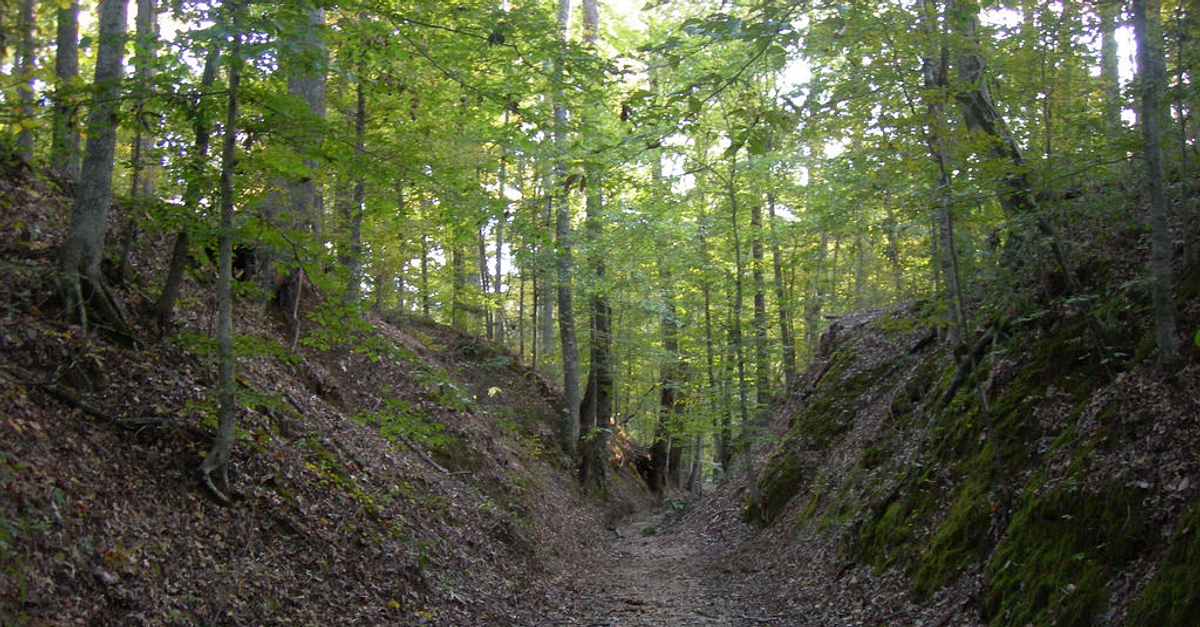
Long before engineers invented them, roads were born out of chance. During Prehistory, hunter-gatherers simply followed the tracks left by wild fauna to cross natural obstacles. This is the case with the famous Natchez Trace in the United States, spanning 710 kilometers, which was shaped by prehistoric herds.
The appearance of the first vehicles and the invention of the wheel in Sumer (Mesopotamia, modern-day Iraq and Syria) during the 4th millennium BC radically changed the game. To allow chariots to roll, flat and stable surfaces were now required.
- Did you know? The first sections of paved streets appeared around 4000 BC in Harappa (Indus Valley Civilization, modern-day Pakistan).
- Around the same time, in Babylon, a revolutionary material was discovered: natural bitumen. Used as a cement to stabilize bricks, it was even used to seal the paving of the famous Processional Way in 550 BC. This expertise, however, was lost with the decline of the empire, as the Romans and Greeks completely ignored this material for their roadways!
2. The « Highways » of Ancient Empires
To govern vast territories, the great empires quickly realized that they needed to control the speed of travel.
The Persian Royal Road: The Ancestor of Express Mail
In the 5th century BC, King Darius I developed the « Royal Road » (2,700 km between Susa in modern-day Iran and Sardis in modern-day Turkey). Thanks to the Chapar Khaneh system—postal relay stations equipped with elite riders—an imperial message could cross the empire in just 7 to 9 days, compared to 90 days on foot.
The Chidao of the Qin Empire
In China, as early as 221 BC, Emperor Qin Shi Huang ordered the construction of the Chidao. These 69-meter-wide express routes had a central lane strictly reserved for imperial patrols. Even more impressive: in the Funiu Mountains, engineers created actual guided tracks made of hardwood with standardized spacing, resembling a primitive, animal-drawn railway.
The Roman Masterpiece
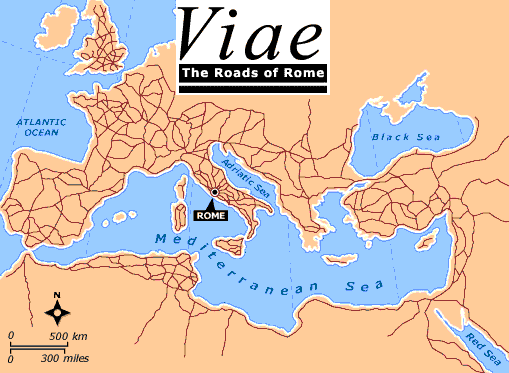
The network of Roman roads (viae) remains the absolute model of Antiquity, stretching over more than 80,000 kilometers. Initiated with the Via Appia in 312 BC, it primarily served a military need: deploying legions as quickly as possible. Roman surveyors (agrimensores) drew perfectly straight lines using precision tools like the groma or the chorobates (for measuring slopes).
A true paved Roman road (via silice stratae) was a masterpiece of technical layering:
- Statumen: Large stones to distribute the load.
- Rudus: Lime concrete and crushed stone debris.
- Nucleus: Fine mortar composed of sand and lime.
- Summum Dorsum: Massive polygonal slabs of hard stone, cambered (curved) in the center to drain rainwater into the ditches.
3. From Medieval Decline to the Metalling Revolution
After the fall of the Roman Empire, Western Europe experienced a long decline in road infrastructure, with stone roads often plundered to serve as quarries. Ultimately, major religious pilgrimages (such as Santiago de Compostela) and the trade of precious commodities revived road axes during the Middle Ages.
In the 18th century, states like France attempted to regain control through centralization (creation of the Ponts et Chaussées body of engineers) and the « corvée royale« , a tax that forced peasants to provide free labor for road maintenance.
The Battle of the Engineers (19th century)
At the turn of the 19th century, three technical approaches clashed to give birth to the modern road:
[Trésaguet (1775)] → Foundation of stones laid on edge (curved profile).
[Telford (1801)] → Standardized cubic stones on a flat base, decreasing in height.
[McAdam (1816)] → NO massive foundation. A « waterproof coat » of small, angular stones..
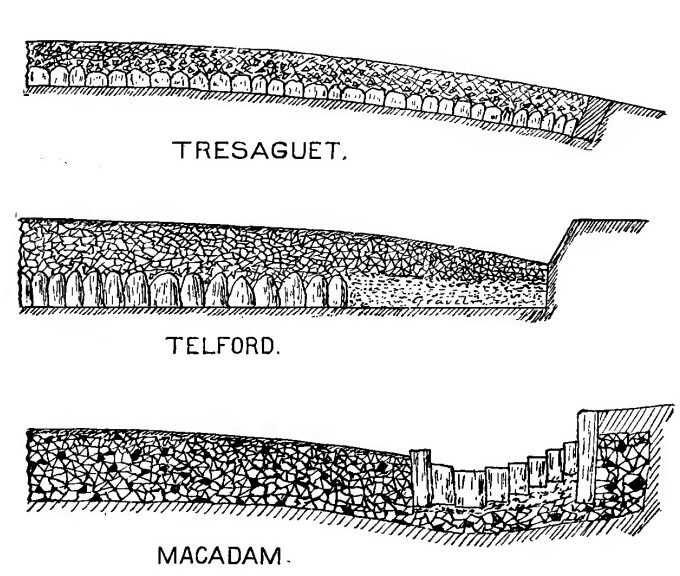
It was John Loudon McAdam’s method that revolutionized the world. He demonstrated that dry natural soil could support vehicles, provided it was protected from water by a layer of calibrated stones without any binding material. In 1829, the Frenchman Antoine-Rémy Polonceau added the rolling process (steamroller) to compact the whole structure.
4. Left or Right: The Riddle of the Traffic Direction
Why does one-third of the world’s population drive on the left and two-thirds on the right? The explanation is primarily military and agricultural.
- The Universality of the Left: Since Antiquity, walking or riding a horse on the left was the norm. Because most riders were right-handed, this allowed them to keep their right hand free to greet others or draw their sword in case of an attack. Even samurai in Japan walked on the left to prevent their swords from clashing (which would have meant an immediate duel)!
- The Shift to the Right: This occurred at the end of the 18th century with the arrival of the Conestoga wagon in the United States. This large wagon had no seat for the driver; instead, the driver sat on the left horse of the rear pair to lash with the right hand. To pass another wagon without risking a collision of the axles, he was forced to pull over to the right. Napoleon later spread right-hand driving throughout his conquered Europe, while the United Kingdom, not using this type of wagon, officialized left-hand driving.
5. The Era of the Automobile and Asphalt
In the 20th century, the arrival of thin and fast automobile tires created a genuine « macadam crisis »: speed vacuumed up the stone dust, destroying roads and creating constant potholes. To stabilize everything, hydrocarbon binders began to be applied as early as 1900, giving birth to modern asphalt mixtures.
The Advent of the Highway
The very first public toll highway exclusively reserved for cars was built in Italy in 1924: the Autostrada dei Laghi (connecting Milan to Varese). Designed by Piero Puricelli, it measured 43.6 kilometers and originally featured only a single two-way roadway.
6. The 21st-Century Road: Intelligent and Decarbonized
Today, the road is experiencing a new youth thanks to the European Forever Open Road program. Face to climate challenges, it is becoming ecological and connected.
- Dynamic Electrification: Projects like eRoadArlanda in Sweden are testing electric rails embedded in the roadway to recharge vehicles while driving via a pantograph. Others, such as wireless inductive charging (copper coils under the asphalt), allow vehicles to absorb energy seamlessly.
- Cooperation with Autonomous Vehicles: Since roundabouts are extremely complex for artificial intelligences, tomorrow’s infrastructures are being equipped with connected cameras and roadside sensors to send real-time traffic data to autonomous car algorithms.
The road took millennia to build, but its journey into the future has only just begun.
Conclusion
In the end, the road is much more than just a technical infrastructure: it is the guiding thread of the human adventure. Every time we step onto the asphalt or take an express route, we walk in the footsteps of prehistoric hunter-gatherers, Roman legions, and visionary 19th-century engineers.
Once traced by the chance of passings, paved today, and connected or capable of recharging our vehicles tomorrow, the road has never ceased to adapt to our ambitions and technologies. It remains the indispensable physical link that unites peoples, crosses borders, and designs, kilometer after kilometer, the contours of our future.
So, the next time you take the wheel or go on a trip, take a fresh look at the grey ribbon stretching out before you: you are driving on millennia of history.
And you, which historical road fascinates you the most? Route 66, Route Nationale 7, or an ancient Roman road near you? Let us know in the comments!
